A translation of notarized documents must preserve names, dates, legal powers, declarations, registry information, seals, and certifications with precision. At Ab Aeterno Traductores, a women-led legal translation firm based in Mexico City, we translate powers of attorney, last wills and testaments, property deeds, corporate documents, affidavits, and other notarial instruments for use in Mexico and abroad.
When the receiving authority requires it, we provide a translation by a court-authorized translator in Mexico (perito traductor autorizado).
Notarized document translation is one of the certified legal translation services we provide as part of our broader legal document translation services in Mexico, alongside contracts, corporate filings, and financial records.
Before starting, we confirm what document you have, where it was issued, and whether the receiving institution has specified a particular type of certification.
We do not outsource your project through a chain of unknown vendors. Your documents stay with the team that analyzes, translates, and checks them, and a second translator reviews the translation before delivery.
Already have the documents? Send us the complete file for a translation quote. We will confirm scope, price, and delivery date before work begins. We take on urgent cases.

Not all notarized or notarial documents require the same type of translation. The document itself, its country of origin, and its intended use, all are significant.
Keep these points in mind:
Translation services do not constitute legal advice. We recommend that you confirm the document requirements with the receiving authority before work begins.

Each type of notarized document raises its own translation questions. Here is how we approach the instruments we work with most often.
A power of attorney authorizes one person to act on behalf of another within the limits established in the document. For that reason, one of the most important aspects of a power of attorney translation is preserving the exact scope of authority granted: a term that is too broad or too narrow can change how a reader understands what the attorney-in-fact or representative may do.
We work with powers of attorney related to:
We also review clauses related to delegation, substitution, revocation, duration, restrictions, and joint or individual authority.
A Mexican power of attorney may need to be translated when it will be presented to a bank, company, attorney, court, public authority, or other institution outside Mexico. The translation must preserve the legal powers contained in the original without expanding or restricting them.
We also pay close attention to the identity of the grantor and representative, dates, notarial information, signatures, seals, and any apostille or certification attached to the document.
A power of attorney issued outside Mexico may require an apostille or legalization and a Spanish translation before it can be used in a particular Mexican procedure. For documents originating in a country that participates in the Apostille Convention, the HCCH explains how the Apostille replaces traditional legalization between Contracting Parties.
In some official procedures, Mexican authorities specifically require foreign-language documents to be accompanied by a translation prepared by a perito traductor autorizado. For example, Mexico's official investment procedures expressly contemplate translations by a perito traductor in certain filings involving foreign companies. See the Mexican Ministry of Economy's investment-procedure guidance. That does not mean every foreign power of attorney follows the same rule.
Before you order the translation, confirm the requirements with the notary, government authority, bank, or institution that will receive the document. If you already have the power of attorney, send us the complete file, including any apostille, certificate, or attachment.
A last will and testament records a person's wishes regarding assets, rights, and other provisions that take effect after death. A translation may become necessary when the estate includes assets, heirs, institutions, or proceedings in more than one country.
In these documents, accurate legal translation requires more than equivalent vocabulary. We need to understand the role of every person, power, and disposition in the original instrument.
We pay close attention to:
Succession-law concepts do not always have an identical equivalent between Mexico and the United States or other jurisdictions. For that reason, we do not choose an English term simply because it looks similar to the Spanish one. We review the legal context and preserve the function of the original concept.
A Mexican last will may form part of an international probate or estate matter. In that context, the translation may help an attorney, court, financial institution, or other party to understand a document created under Mexican law.
Terms such as albacea, heredero, and legatario require contextual analysis. Their function may overlap with English-language concepts such as executor, heir, beneficiary, or legatee, but those terms are not interchangeable in every document. Our goal is to preserve what the Mexican instrument actually says and does.
An international estate rarely consists of a single document. We can also translate:
When several documents belong to the same estate file, we treat them as a connected set and maintain consistent terminology across the project.
An affidavit contains declarations made under oath or affirmation according to the rules of the jurisdiction where the document was executed. Translation of affidavits and sworn statements often serve court, immigration, corporate, administrative, and financial matters. The English terms affidavit, sworn statement, and statutory declaration do not necessarily describe the same legal instrument.
We identify:
Not necessarily. In some contexts, declaración jurada may serve as a functional translation for an affidavit or sworn statement. In other situations, the documents differ in form, legal basis, or the role of the authority who receives the declaration. We review the actual document before we choose the terminology, so the translation describes the instrument accurately rather than forcing it into a legal category that does not match the original.
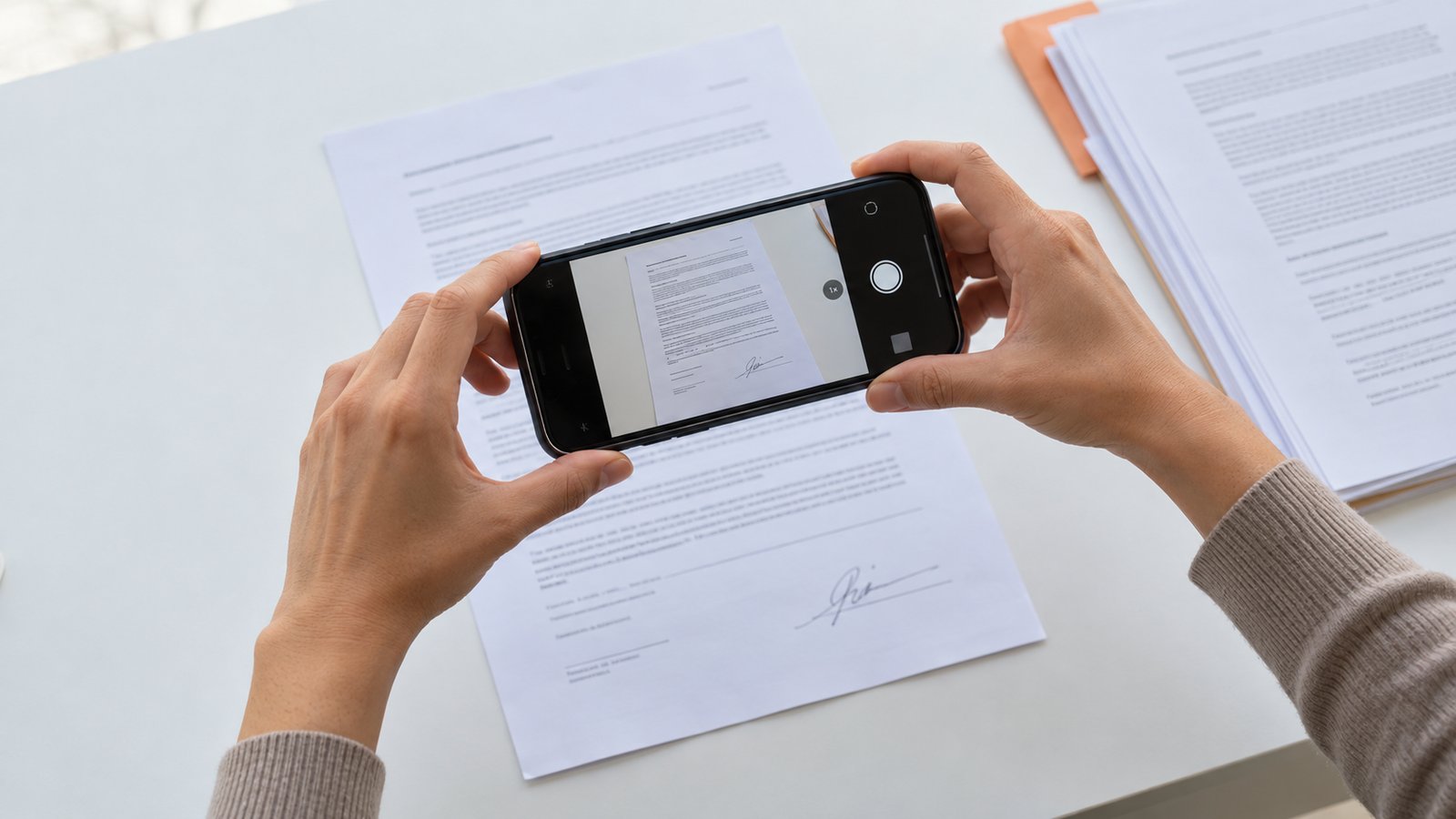
Real estate documents can contain large amounts of technical, notarial, and registry information. The translation of real estate documents may be needed for a purchase, sale, inheritance, donation, mortgage, financial transaction, or legal proceeding involving property in more than one country.
For foreign owners and property managers, related documentation may also include purchase agreements, property deeds (escrituras), leases, management agreements, trusts, tax records, and operating documents. Our guide to translating short-term rental and real estate contracts in Mexico covers several of these documents.
Depending on the document, we review:
Mexican property instruments may need to be translated when an estate, company, bank, attorney, tax adviser, or court outside Mexico needs to review the ownership or transaction. The translation must preserve the notarial and registry information in the documents.
Articles of Incorporation define the legal structure of a company and establish the rules that govern it. When a company operates across borders, its articles of incorporation and related corporate documents may need to be translated for banks, investors, public authorities, counsel, or counterparties. Companies entering the Mexican market can also review our guide to business-to-business translation services in Mexico.
We review:
We do not replace a Mexican legal entity type with a U.S. or foreign entity that only appears similar. The corporate structure must remain clear.
A foreign company may need to submit more than its Articles of Incorporation. A corporate file can include articles of incorporation, bylaws, amendments, powers of attorney, certificates of registration, shareholders' meeting minutes, corporate resolutions, and apostilles or legalizations.
Certain Mexican procedures require foreign-language corporate documents to be accompanied by a Spanish translation prepared by an authorized expert translator. Mexico's official investment-procedure portal provides examples of procedures that expressly require translation by a perito traductor autorizado. The exact requirement depends on the procedure.
When we receive a complete corporate file, we establish terminology control from the beginning. This helps us keep entity names, titles, corporate bodies, and legal powers consistent across every document. If the file also contains agreements, our contract translation services in Mexico can be coordinated with the corporate-document project so that defined terms and company information remain consistent throughout the translations.
Shareholders' meeting minutes record decisions made by a company's shareholders or partners. Those decisions may affect management, capital, corporate bylaws, or powers of representation. We review elements such as:
Meeting minutes often form part of the same legal history as the articles of incorporation, bylaws, and powers of attorney. When we translate several of these documents for one company, we use a common glossary and apply consistent terminology across the file.
Notarial documents can include more than deeds, last wills, and powers of attorney. We also translate notarial acts, certificates, acknowledgments, jurats, certifications of facts, and related instruments. The critical question is: what did the notary or public official certify?
A notarial act may record facts or circumstances observed by a notary or other authorized official. The translation must clearly distinguish what the official personally observed, what another person stated, what documents were presented, and where and when the act took place. This distinction matters because a translation should not attribute a third party's statement to the notary.
Documents from the United States often contain an acknowledgment or a jurat, and they are not the same thing. An acknowledgment generally concerns the identity of the signer and the recognition of the signature or execution of the document. A jurat typically involves an oath or affirmation and the signing of the document before the authorized official. The language and legal effect depend on the jurisdiction, so we do not translate both with one automatic Spanish term.
We provide translation of certified copies and notarial certificates. A certified copy or notarial certificate may contain information about the certifying authority, the capacity in which that person acts, the individual who appeared, the date and place, the type of certificate, the signature, the seal, and data about the commission or authorization. If a seal or part of the original text is illegible, we do not invent or reconstruct information that we cannot verify.
No. A Mexican notario público and a U.S. notary public are different statutory figures. In Mexico, a notario público is a legal professional who receives public authority to formalize and authenticate a broad range of legal acts. In Mexico City, the Notarial Law expressly describes the notarial function as a professional practice of law with legally recognized public functions.
A U.S. notary public generally performs a much narrower function. The U.S. Department of State describes notarial services in terms such as witnessing signatures and verifying identity, subject to the applicable law.
An apostille, a notarial act, and a certified translation perform different functions. An apostille authenticates specific aspects of a public document for international use under the applicable apostille system. The apostille must be translated as well as the document for which it was issued.
In many international files, the client obtains the apostille first and then requests a translation of the complete document, including the apostille. That sequence is common, but it is not a universal rule. The order depends on the country, procedure, and receiving institution.
We recommend that you confirm the requirement with the receiving authority before you start.
Yes, when the apostille forms part of the notarized document that needs to be presented in another language. An apostille contains information about the signatory, authority, seal or stamp, place of issuance, date, and certificate number.
If your document already has an apostille, send us that page together with the complete original.

Not every legal or notarized document requires a certified translation by a court-authorized translator, or perito traductor autorizado. The requirement depends on the procedure, type of document, authority or institution receiving it, country where the document was issued, and language of the original.
Some Mexican government procedures expressly require documents in another language to be accompanied by a translation prepared by an authorized expert translator. For example, Mexico's Ministry of Economy includes this requirement in certain procedures involving foreign corporate documentation. Mexican procedural law also contains specific rules for foreign-language evidence: Article 315 of the National Code of Civil and Family Procedure addresses translations of documents submitted in a foreign language and the use of a perito traductor autorizado when translations are disputed. Other institutions may have different rules, so certification is not always mandatory.
Translation services do not constitute legal advice. We recommend that you confirm the requirement directly with the receiving institution.
A notarized document consists of more than its main clauses. The translation must reflect information found in headers, letterheads, seals, signatures, stamps, certificate numbers, deed numbers, marginal notes, apostilles, legalizations, attachments, handwritten text, and notarial certificates.
Some documents also contain partially illegible seals, signatures without printed names, or handwritten notes. We never invent information that cannot be collated with the original. When an element is unreadable, we identify it appropriately in the translation instead of attempting to reconstruct it.
Ab Aeterno Traductores is a women-led team of legal translators based in Mexico City. We have worked with legal and official documents since 2005. When a procedure requires certification, the translation is signed by María Inés Ojeda Pesquera, a court-authorized translator-interpreter licensed by the Superior Court of Justice of Mexico City (Tribunal Superior de Justicia de la Ciudad de México). We keep control of the project within our team instead of outsourcing it through an anonymous chain of vendors.
We check whether you were specifically asked for a certified translation, a court-authorized translator, a hard copy, or a particular format.
If the instructions simply say "certified," "official," or "notarized translation," our guide to certified translators and official translation services in Mexico can help clarify why those terms should not automatically be treated as interchangeable.
We select the translator according to the language pair, document type, and legal subject matter. Your document does not move through a marketplace of unknown providers.
For files that contain several related documents, we identify key terms before the translation begins, including company names, titles, corporate bodies, legal concepts, powers and authorities, defined terms, and registry information. This prevents unnecessary variation between documents.
For corporate files, the same terminology-control principle applies across articles of incorporation, powers of attorney, resolutions, and contracts or related agreements.
A second translator checks the translation before delivery. We pay particular attention to names, dates, numbers, amounts, percentages, registry references, internal cross-references, as well as seals and certificates.
If the receiving institution requires a certified translation by a perito traductor autorizado, we assign the project accordingly. Our responsibility is to provide the agreed translation service with professional rigor and accuracy.
We verify the price, delivery date, and format before work begins. If you have an urgent deadline, tell us when you request your quote. We handle urgent projects when the document length, language pair, and team availability allow us to do so without compromising the review process.
Notarized documents and other legal files may contain sensitive personal, financial, corporate, and property information. We apply strict confidentiality and restrict access to the team members who need the documents for translation, review, and project management. Because we do not send projects through an uncontrolled chain of external providers, we maintain closer control over both terminology and document handling.
You can review our Privacy Notice for information about Ab Aeterno's handling of personal data. If your company, law firm, or transaction requires specific confidentiality procedures, tell us when you request the quote.
There is not a single price for every notarized document translation. The quote depends on factors such as document length, language pair, legal complexity, quality of the source file, certification requirements, final format, urgency, and physical delivery when requested.
A two-page power of attorney requires a different process from an 80-folio property deed or a corporate file with several related instruments.
Send us the complete document for a translation quote and we will provide the price before work begins.
The delivery time for a notarized document translation depends on the number of pages, language pair, legal complexity, and type of certification required. A project may also require additional review when several documents must use the same corporate or legal terminology.
We confirm the delivery date after we review the file. We do not assume a standard deadline before we analyze the document. If you have a court date, closing, corporate filing, or other urgent deadline, tell us from the beginning to confirm if we can meet it.
If you need notarized document translation in Mexico, send us the complete file. We translate powers of attorney, last wills and estate documents, affidavits and sworn statements, property deeds and real estate documents, articles of incorporation, shareholders' meeting minutes, notarial acts, acknowledgments and jurats, certified copies, apostilles and related certifications.
At Ab Aeterno Traductores we provide personal attention, terminology control, and review by a second translator. When the procedure requires it, we provide certified translations by a perito traductor autorizado. Notarized documents are one part of our certified legal translation services in Mexico: for corporate matters, we also provide contract translation services in Mexico and translation of supporting financial documents such as invoices and bank statements.
We do not outsource your project through an unknown chain of vendors. You communicate with the team that reviews, translates, and checks your documents.
To request a translation quote, send us:
We serve clients in Mexico City, throughout Mexico, and abroad. We take on urgent cases.
 Location